Understand the Foundations of AI-Driven Data Management
Learning Objectives
After completing this unit, you’ll be able to:
- Explain why AI-driven data management matters for your organization.
- Describe how CLAIRE supports key IDMC solutions.
Why AI-Driven Data Management Matters
Your organization generates more data every day—from customer records and sales transactions to loyalty programs and cloud warehouses. Keeping all of it accurate, connected, and ready to use takes serious effort. When teams rely on manual processes, that effort slows everything down and leaves room for costly mistakes.
That’s where AI comes in. With AI-driven data management, you can automatically discover, connect, and clean data at a speed and scale that manual work simply can’t match. In this unit, you learn how CLAIRE, the Informatica AI engine, handles the hard parts of data management for you.
A Day Without AI
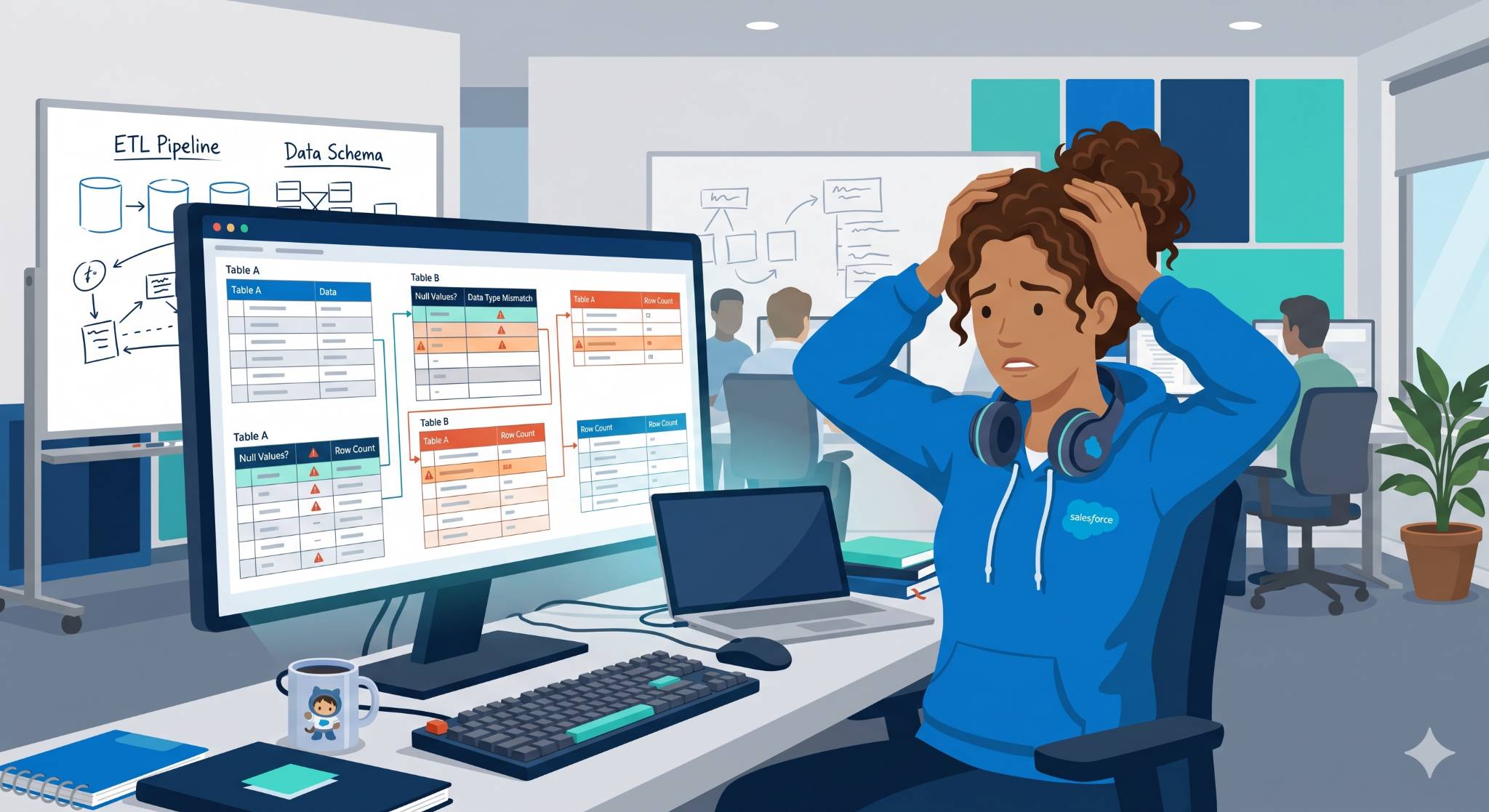
It’s 9:00 AM. Your marketing vice president wants to report on “High-Value Customers” for a flash sale launching today. Your data engineering team gets to work. Without AI, this is where things get complicated.
-
The discovery problem: A data steward searches manually through thousands of tables across three cloud warehouses. The metadata is outdated, so they have to guess which columns contain "Email" or "Customer ID."
-
The integration problem: Without automated field matching, the team spends hours writing complex SQL joins to link “Customer ID” in the sales database with “User_UUID” in the loyalty app—only to discover late in the process that the formats don’t match.
-
The quality problem: Someone manually samples the data for profiling and misses that 15% of City field entries contain “N/A.” The report goes out 24 hours late, riddled with duplicates.
The result: The flash sale is delayed. The marketing budget is spent on “high-value customers” who turn out to be duplicate records of the same person.
Each of these problems points to the same need. Systems need to automatically crawl and tag metadata, recognize that different field names refer to the same data, and scan 100% of your records in real time to catch quality issues before they become business problems. That’s what AI is built to do.
Meet CLAIRE
CLAIRE is the AI engine behind Informatica Intelligent Data Management Cloud (IDMC). It scans your organization’s technical and business data and automates the repetitive work of cataloging, mapping, and cleansing.

CLAIRE steps in where manual work fails, easily tackling the massive volume and complexity of today’s data that traditional methods just can’t handle. By automating routine tasks, enforcing data governance, and democratizing data access for everyone, it brings serious value to your organization.

Back to the Flash Sale
Now that your data engineering team has CLAIRE, the story ends differently.
They find high-value customer records in seconds. IDMC creates field mappings automatically. It removes duplicate records, and tags sensitive data without any manual effort.
By 10:30 AM, the vice president has a clean, accurate, and secure list. The flash sale launches on time.

How CLAIRE Supports IDMC Solutions
In IDMC, CLAIRE makes every data solution faster and smarter. Here’s how CLAIRE supports core IDMC solutions.
-
Data integration, your development assistant: You describe a data flow in plain English and CLAIRE generates the mapping and SQL logic for you. It also recommends transformations, completes mappings, suggests templates, and flags performance issues.
-
Data governance and catalog, your metadata librarian: CLAIRE scans your data and automatically identifies sensitive information such as personally identifiable information (PII). It links business terms to technical data assets, connects data quality rules to critical data elements, and maps the full lineage of your data. This shows where each record comes from and where it goes.
-
Data quality, your data health monitor: CLAIRE scans 100% of your data to surface anomalies, inconsistencies, and outliers. It discovers quality issues automatically through profiling results and flags problems your team might otherwise miss.
-
Master data management, your identity resolver: CLAIRE recognizes that "Jon Doe" and "Jonathan Doe" are likely the same person, even if their IDs differ. It merges duplicate records into a single, trusted golden record so you avoid multiple entries for the same client.
-
CLAIRE GPT, your conversational interface: Anyone on your team—not just developers—can interact with data using natural language. Ask, "Show me all high-quality datasets for customer churn," and CLAIRE GPT finds them, explains their quality scores, and shows who else is using them. You can also create data pipelines and data quality rules with natural language.
In the next unit, you explore how to use CLAIRE GPT to discover data, assess quality, and build pipelines—all through conversation.