Get to Know IT Request Management
Learning Objectives
After completing this unit, you’ll be able to:
- Describe IT service request management and related challenges.
- Explain how Agentforce IT Service enhances IT service request management.
- List the request management components and tools.
Before You Start
Before you start this module, consider completing this recommended content.
Managing IT Requests
While IT teams are mostly known for handling system outages or troubleshooting bugs, a large part of their job boils down to simply handling requests. When employees need a new laptop, software installation, a password reset, or other type of IT service, they submit requests to get the items or support that they need. IT professionals then field and assign the submitted tickets, and take the steps to resolve the request, including provisioning any needed assets.
When this process goes well, employees get what they need to do their job and operations continue running smoothly. When it goes poorly, tickets pile up, IT teams fail to meet their service level agreements (SLAs), and employees are left stranded. As time goes on, these bottlenecks can lead to a cascade of negative consequences that impact the organization’s productivity, security, and finances.
Fast and effective request management comes down to having the right system in place. Unfortunately, many companies and organizations rely on legacy applications and siloed tools, which make it difficult for IT teams to maintain asset lists, track inventory, and respond to tickets. Meanwhile, employees often rely on email or clunky interfaces to submit their requests, and don’t have visibility into the status of service or asset delivery.
In this modern age, your IT teams and employees deserve a service request system that’s unified, automated, AI-driven, and easy to use. In this badge, you learn how Agentforce IT Service provides the exact solution you need.
Request Management in Agentforce for IT Service
Agentforce IT Service is designed to serve both IT teams and employees with a comprehensive system and intelligent tools for managing requests. It stores all of your IT services, assets, and service processes in one place, and greatly simplifies request and response workflows.
How It Works
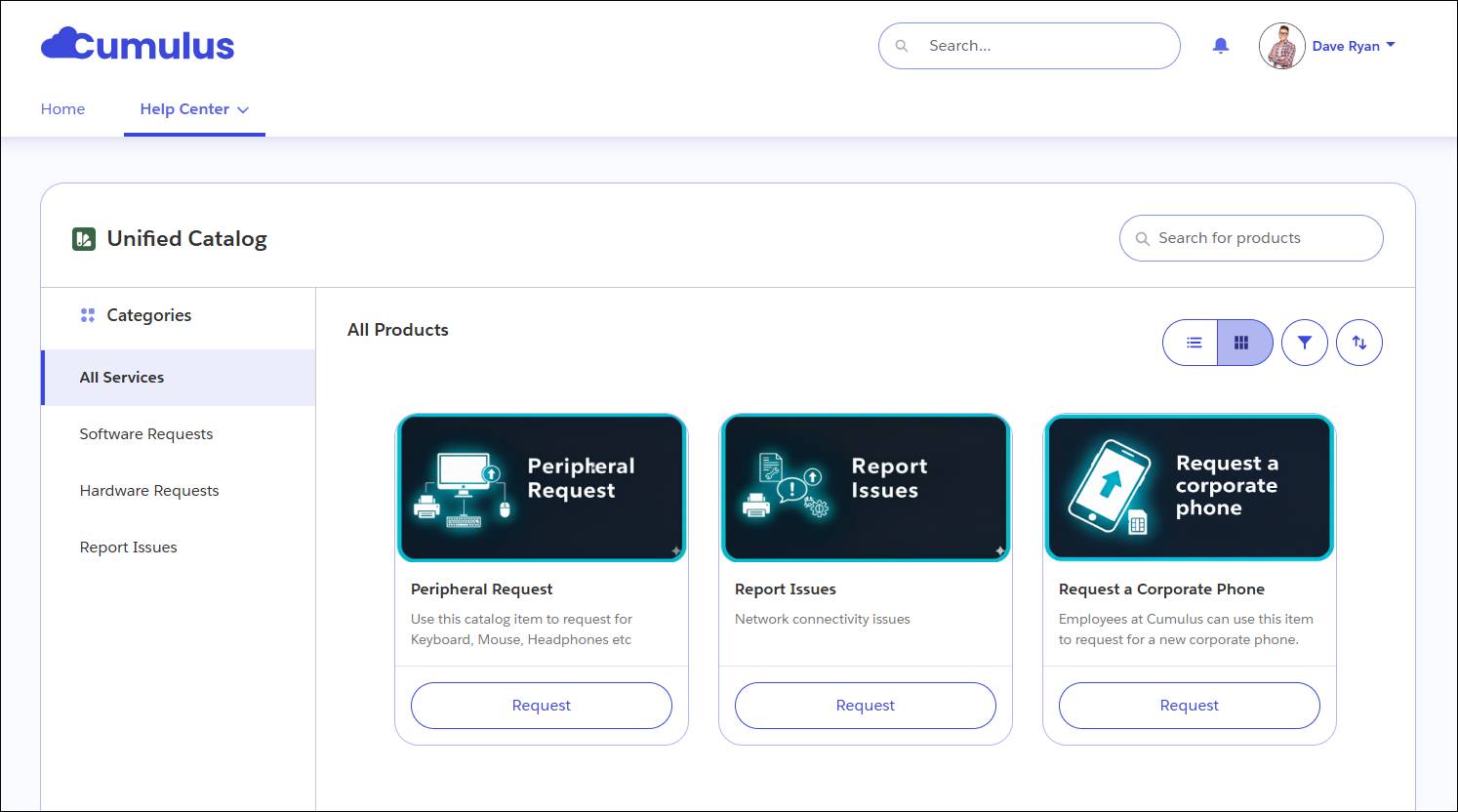
From an online portal or Microsoft Teams, employees can browse or search a catalog of assets and services and submit requests by filling out a form.
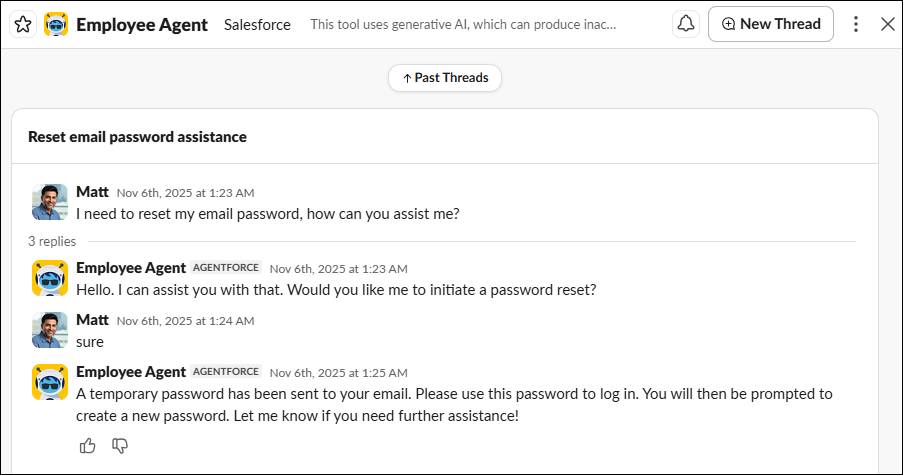
Or they can interact conversationally with an AI agent to request hardware, software, or services. For example, when an employee tells the agent that they need a password reset, the agent automatically completes the steps to create a temporary password, and notifies the employee of the next steps they need to take.
After an employee submits a request, the system automatically creates applicable records, such as incidents, cases, or service requests. Then, it routes and collects any needed approvals and assigns any manual tasks to the applicable IT team. Flows and other automation manage all the steps required to complete a request, while service processes guide IT reps towards a resolution.
This reimagined IT request experience ensures consistent, accurate, and expedient self-service resolutions, minimizes downtime, and removes roadblocks for employees. It also frees up IT staff to focus on more complex incidents.
Request Management works alongside the broader suite of Agentforce IT Service solutions.

If you haven’t already, check out the Agentforce IT Service Basics to learn more about each of these powerful processes and elements.
Now that you understand the basics of Request Management, let’s explore the tools and components that make it possible.
Request Management Tools and Components
Take a moment to explore the building blocks of Agentforce IT Service Request Management.
Unified Catalog
The Unified Catalog serves as a one-stop shop for all of the services that employees can request, including new equipment, software installations, and support. This isn’t just a static portal–the catalog extends into knowledge articles, and collaboration workspaces like Slack and Microsoft Teams. Catalog information also powers the Agentforce Employee agent.
Agentforce Employee Agent
Through an online portal, Slack, or Microsoft Teams, employees can converse with the Agentforce Employee agent to report problems, ask questions, and request services. The agent answers questions, interprets each request, and presents the correct service catalog item to solve the issue.
Service Processes
Each item in your catalog is connected to a service process, which defines the workflow for delivering a service or fulfilling an asset request. You can configure each service process to create an incident, case, or request, quickly connect custom intake forms with selectable product lists, and set up related approvals, escalations, and automation.
Omniscripts and Flows
Create Omniscript-based or flow-based intake forms to collect needed information from the requester, or quickly generate an intake form directly from the service process. As you learn later, the flow engine also automates end-to-end fulfillment workflows for rapid and consistent service delivery.
Agentic IT Service Desk
The Agentic IT Service Desk, a preconfigured console app, gives IT teams a centralized workspace to manage and resolve employee requests that originate from any channel. IT support reps, fulfillers, and managers can quickly access their incidents and requests, and review details, requester information, and asset dependencies.
Wrap It Up
Now that you’ve learned how Request Management works in Agentforce IT Service, you’re ready to dig deeper into the tools and components aforementioned. You can see Agentforce IT Service in action as you follow employees at Orivian Global Holdings, which use Agentforce IT Service to accelerate its IT support.
Ready to reimagine how you deliver the essential IT services that keep your employees equipped and your organization running smoothly? In the next unit, you learn how the service catalog and service processes serve as the solid foundation for efficient request management.