Meet the Engineering Team Building What’s Next
Learning Objectives
After completing this unit, you’ll be able to:
- Explain what the Salesforce Engineering team does and how it’s organized.
- Describe the engineering focus areas and the architecture Salesforce engineers build.
- Communicate how Trust, composable architecture, and AI-native infrastructure shape the way Salesforce engineers build.
Understand the Salesforce Engineering Ecosystem
Do you want your code to reach millions of people overnight? Do you care about why something is built as much as how it’s built? Are you curious about building the intelligence itself, not just using it? At Salesforce, engineers aren’t maintaining what already exists—they invent what comes next. This includes the data foundation, the agent platform, and the developer tools that enterprises around the world depend on to run their businesses. When a customer deploys an AI agent, your architecture keeps it secure and reliable.
Build for Scale and Impact at the Center of the Agentic Era
Salesforce is the #1 AI CRM. It leads the shift toward the Agentic Enterprise, where humans and AI agents collaborate side by side to multiply our potential. As an engineer at Salesforce, you build foundational infrastructure that powers the entire agentic economy on distributed systems that serve millions of users worldwide. And through it all, Trust is our #1 value. It guides every deployment and decision.
Our engineers adopt new workflows quickly. They bring curiosity, a collaborative mindset, and the willingness to challenge how they work. You’re part of a team that moves quickly, learns continually, and leads change rather than react to it. Working alongside agents leaves you with more time to solve complex problems and build what comes next.
Learn how Salesforce got its engineers to use AI at scale, including the infrastructure, governance, and cultural changes involved: How We Got Our Engineers Using AI — Without Breaking Everything.
Why Engineers Work at Salesforce
Salesforce engineers build the future of AI-powered business. Engineers here are problem solvers and collaborators at their core. It’s exactly the kind of environment we’ve built for them to thrive in. These are some of the values that draw engineering talent here, and part of the reason Forbes has named us one of America’s Best Employers for Engineers.
-
Architect at scale: You design distributed systems for millions of simultaneous users, where reliability is critical.
-
Shape enterprise AI: You build the AI models, agents, and infrastructure behind Agentforce.
-
Work alongside AI agents: Agentforce Vibes and automated development pipelines help with routine tasks, so you can focus on product and architecture.
-
Ship with impact: You build on a platform that helps more than 150,000 companies of all sizes, across every industry.
-
Test agents before release: The Agentforce Testing Center runs batch tests on your agents, helping you validate behavior and catch gaps before you deploy.
How the Engineering Team Is Organized
Salesforce engineers span different teams, work on various products, and come from different backgrounds. Here’s how the team is structured so you can start thinking about where you fit in.
By Organization
Engineering sits in the Tech and Product organization. Teams include Software Engineering, Product, Data, Enterprise Tech and Infrastructure, Security, and Salesforce AI Research.
By Product Area
Each team aligns to the core Salesforce platform, a major cloud, or a product such as Data Cloud, Tableau, Slack, or MuleSoft. Together, these teams serve customers in industries from Financial Services to Healthcare. Salesforce supports growth through AI enablement programs, role evolution toward a Builder + AI model, and dedicated training time.
Types of Engineering Roles
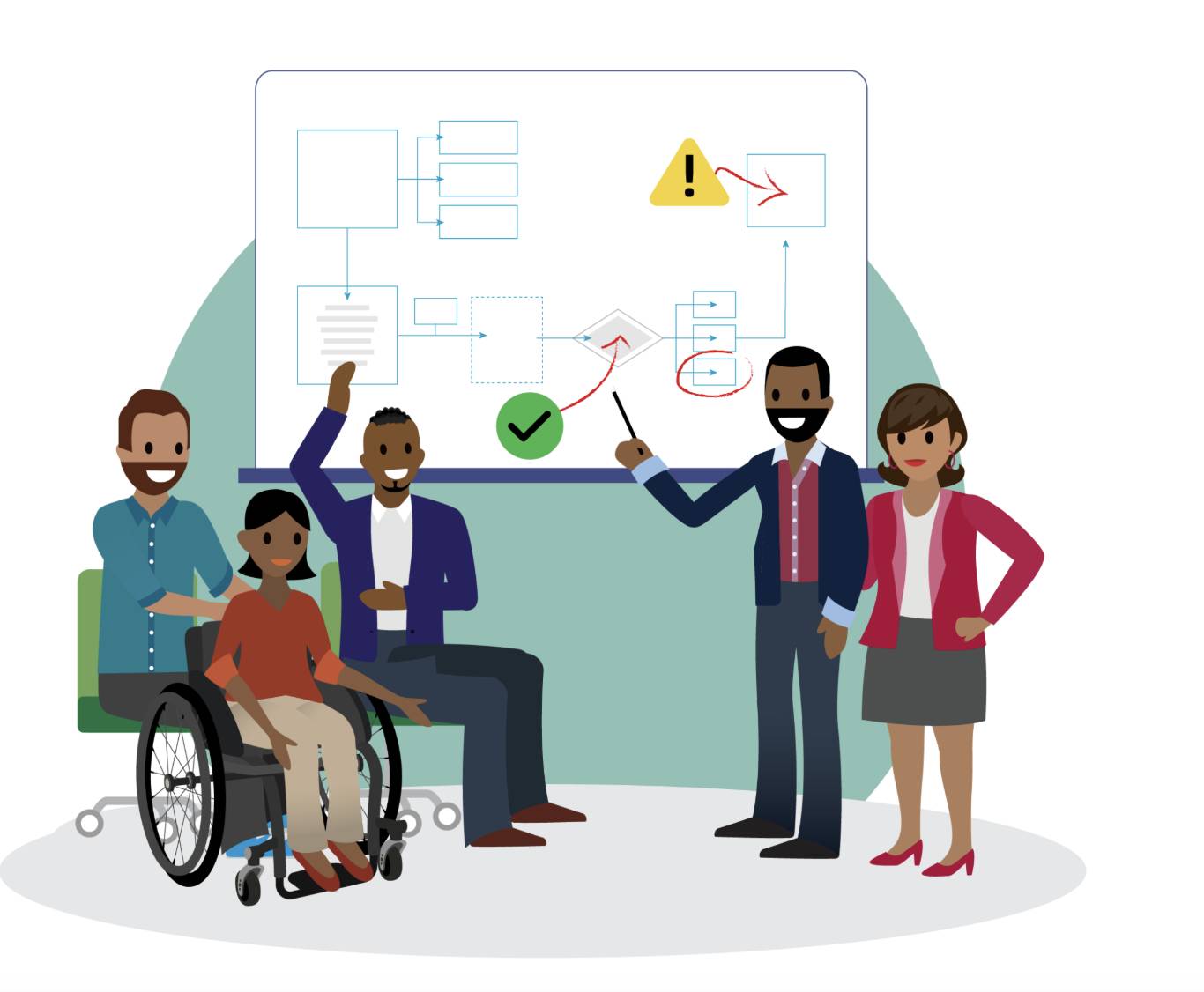
You aren’t limited to one role. Internal Transfer Fairs let you explore new teams and raise your hand for new challenges. Whether you focus on AI, infrastructure, platform, security, or product, you have room for growth in roles that span entry level to architect.
What Engineers Work On
Salesforce engineers work on and with these technologies today:
-
AI-Native SDLC and the Engineering Operating Systems (OS): Engineers work in a Slack-powered infrastructure every day, rethinking how code gets planned, reviewed, tested, and shipped when AI agents are active participants at every stage.
-
Engineering 360: This platform brings together data from hundreds of internal systems, such as security, availability, quality, and productivity, so teams can make data-driven engineering decisions.
-
AIforce: The live interface of the Salesforce portfolio brings Salesforce to customers and employees on any surface through experiences like Slackforce, Claudeforce, and Agentforce Coworker.
-
Headless Toolkit: The APIs, MCP servers, and other developer tools power AIforce and connect Salesforce to AI surfaces securely, so you can build your own interfaces.
Let’s focus on two of these systems that help our engineers work more efficiently and show how we build with technology first, then bring it to customers: the Engineering OS and AIforce.
Use Slack as the Engineering OS
Salesforce rebuilt Slack, where engineers already work, as its Engineering Operating System. Within Slack, engineers trigger deployments, run infrastructure commands, and orchestrate agents, next to team conversations. The Engineering Agent resolves incidents in over 1,000+ internal Slack channels. The best part? You stay in one place, focused on your build, instead of switching between tools.
Learn more about how Slack brings the Agentic Enterprise to life at TDX 2026.
Understand AIforce and the Headless Toolkit
When Co-Founder & Chief Technology Officer, Parker Harris, asked "Why should you ever log into Salesforce again?", he set the vision for AIforce–Salesforce’s live interface layer.
Through the Headless Toolkit, builders programmatically access Data 360, Customer 360, and Agentforce to orchestrate actions in any surface or AI model. Crucially, 27 years of built-in permissions and business logic travel with every endpoint, ensuring all human and agent actions stay governed and trusted.
Follow along as Marc Benioff, Chair and CEO, at Salesforce introduces AIforce, and how Trailblazers can multiply their potential with this live, intelligent interface for the Agentic Enterprise.
Summary
Now you know that Salesforce Engineering focuses on distributed systems, AI-native development, and a deep commitment to Trust, our #1 core value.
In the next unit, you review how to prepare for the interview process: what we look for, how we assess it, and what to expect at each stage.
Resources
- Salesforce News and Insights: Pioneering the Agentic Shift Within Salesforce Engineering
- Salesforce 360 Blog: Operational Intelligence: Turning Enterprise Data Into Enterprise Decisions with AI
- Salesforce YouTube: The Top 2 Use Cases for AIforce
- Salesforce YouTube: AI You Want, Trust You Need | AIforce Keynote, Dreamforce 2026
- Salesforce YouTube: Meet the new Slack. Where AI works | Key Moments
- Salesforce YouTube: 3 Things Developers Must Know From TDX26
- Salesforce Plus: Security Keynote: Trust Across Agents, Data, and Platforms
- Salesforce Agent and App Development: Resources
- Salesforce Engineering: The AI-Native Engineer: How Salesforce’s Next Generation is Redefining Software Development
- Salesforce Engineering: The Salesforce Engineering Blog
- Salesforce T&P: Technology & Product Careers